Project Info
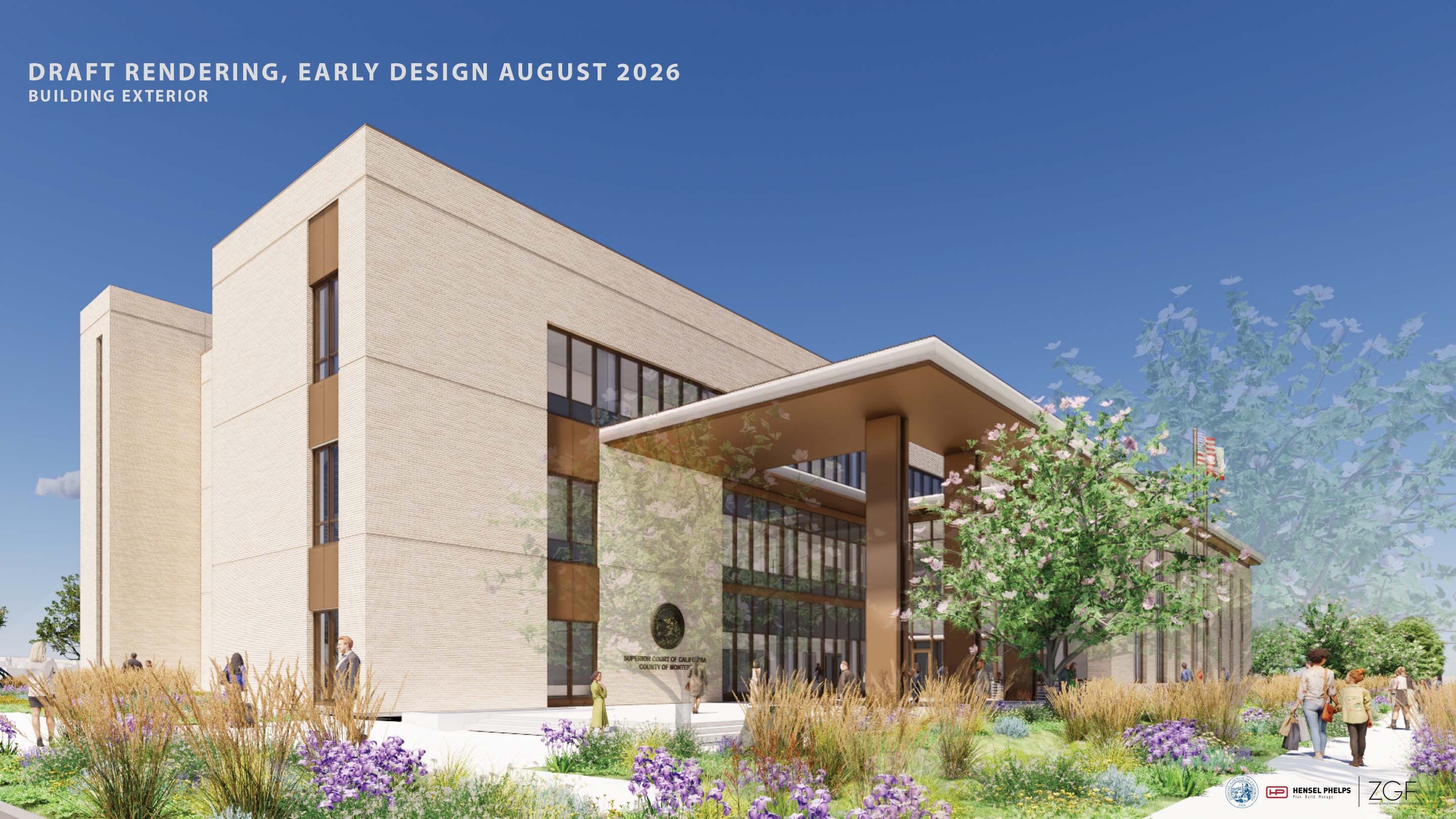
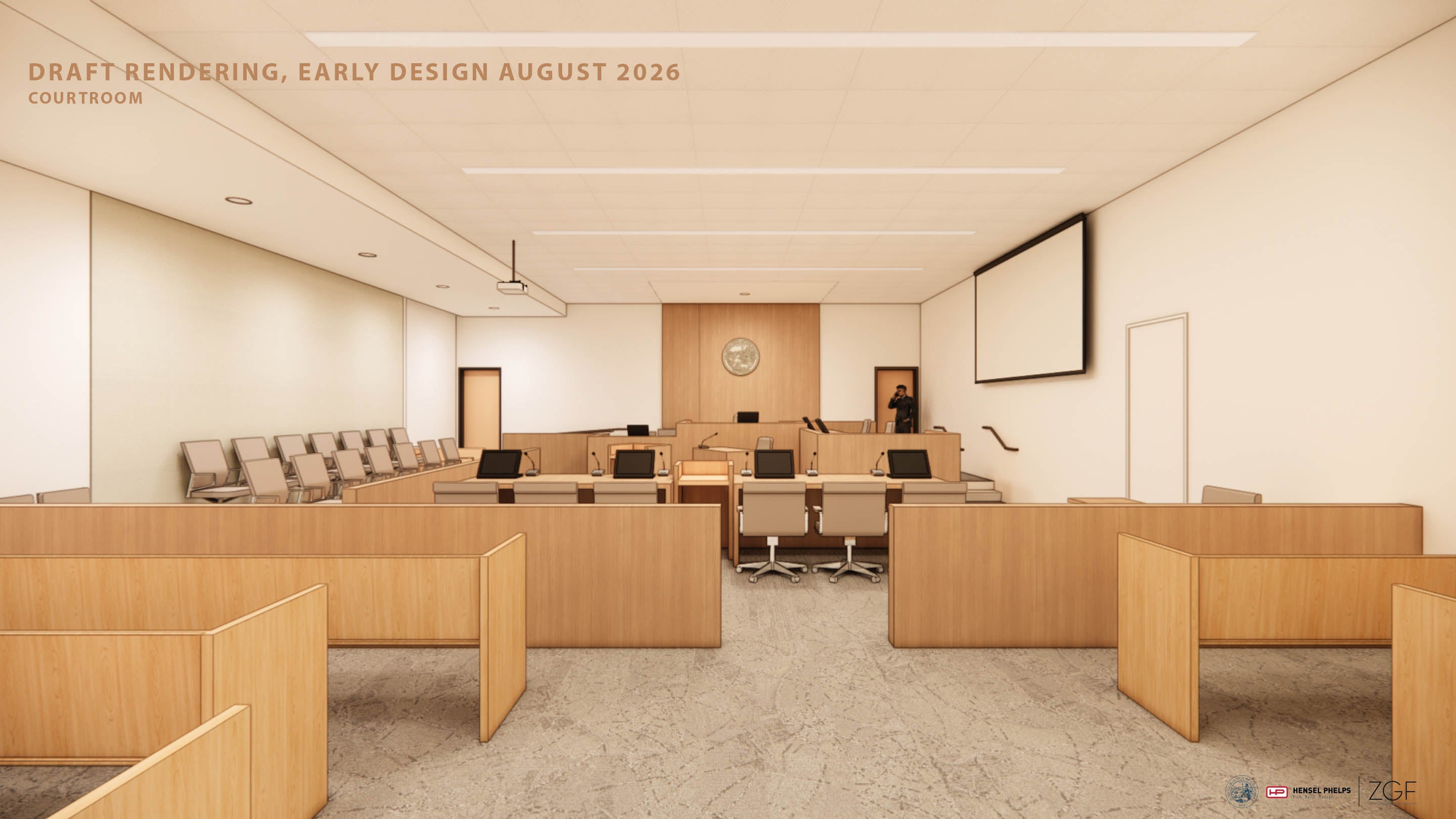
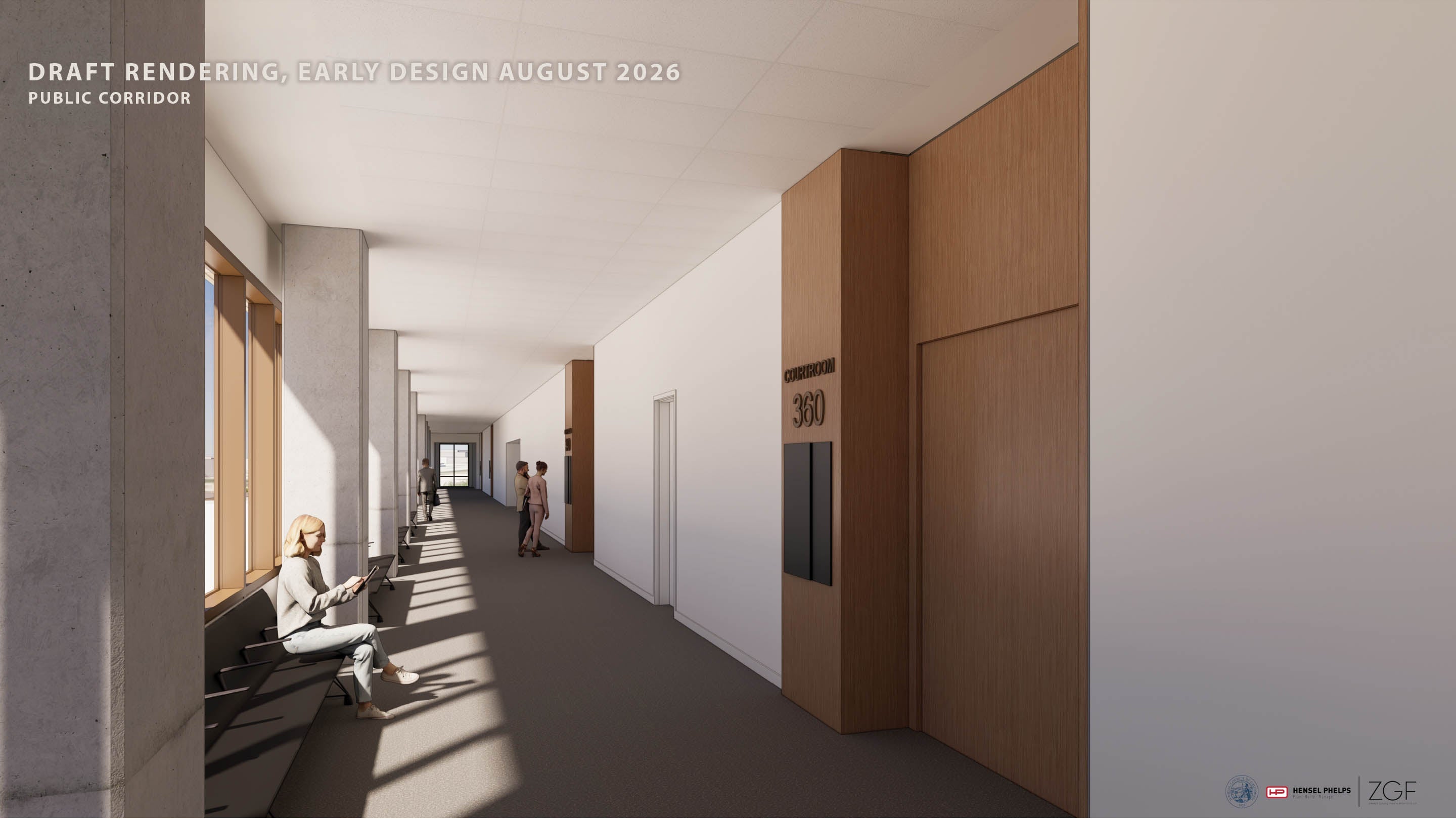
The Superior Court of California, County of Monterey New Fort Ord Courthouse project constructs a three-story, 83,000 square foot, seven-courtroom facility with parking for judicial officers, court staff, jurors and the public. A five-acre site was acquired, and off-site utility infrastructure was improved.
The new courthouse replaces the aging and overcrowded Monterey courthouse, consolidates calendars and operations from the Marina and Salinas courthouses and vacates two other court facilities, the Gabilan Annex and the Juvenile Justice Court. One central location will now house family law, probate and civil operations.
The project benefits from the higher quality, innovative collaboration, faster execution and cost effectiveness characteristics of the design-build project delivery method.
Targeting LEED® Silver, the project showcases a sustainability focus through features such as solar power generation, reduced water use, rainwater management and design elements encouraging public transit and bicycle use.
Background
Monterey County is served by multiple court facilities located throughout the county, with the court assigning cases to facilities based on case type. The Salinas Courthouse functions as the main courthouse and houses the court’s administration and jury commissioner office and handles criminal, prison, mental health, drug and juvenile dependency cases. The Juvenile Justice Court, also in Salinas, handles juvenile justice and juvenile truancy cases. The Monterey Courthouse handles restraining orders for domestic violence and civil harassment, family law, family support, civil and probate cases. The Marina Courthouse handles traffic, juvenile traffic, child support and small claims. The King City Courthouse handles traffic cases.
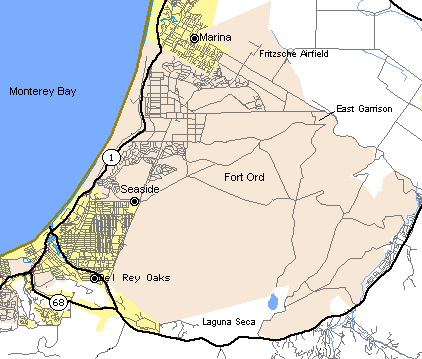
The New Fort Ord Courthouse will replace the Monterey Courthouse and consolidate one court department from the Marina Courthouse and one court calendar from the Salinas Courthouse. The Monterey facility has many deficiencies, aging building systems and a seismic safety rating placing it in the very high risk category. The project relieves the current space shortfall, enables collocation of related functions for operational efficiency and improves security, accessibility and safety.
The New Fort Ord Courthouse addresses the following immediately-needed improvements to the Superior Court and improves its ability to serve the public:
- Enhances the public’s access to justice by consolidating family law and civil operations and juvenile dependency calendar in one location, relieving the current space shortfall, increasing security and replacing inadequate and obsolete facilities.
- Provides a safe and efficient branch courthouse that will provide service countywide and become the second largest and busiest court facility.
- Provides a new courthouse that is compliant with regulatory safety, seismic and accessibility codes and Judicial Council space standards.
- Relocates seven court departments from existing unsafe, substandard and overcrowded facilities.
- Improves operational efficiencies by consolidating case types.
- Replaces the Monterey Courthouse which is rated as a Federal Emergency Management Agency P-154 Very-High-Risk seismically deficient building.
- Avoids over $7 million in future deferred maintenance expenditures.
- Optimizes use of existing court facilities by:
- Repurposing space in the Salinas Courthouse vacated by juvenile dependency (moved to the new courthouse) for consolidating annex offices and self-help services.
- Repurposing space in the Marina Courthouse vacated by child support (moved to the new courthouse) for consolidating juvenile delinquency calendar/operations.
- Vacates three non-state-owned facilities, terminates two county joint occupancy agreements and one private entity lease.
This project is in the Immediate Need priority group and consequently is one of the highest priority trial court capital-outlay projects for the Judicial Branch.
CEQA
Pursuant to the California Environmental Quality Act (“CEQA”), the Judicial Council of California is required to analyze the potential environmental impacts of each of its proposed projects. California’s environmental review process under CEQA provides an opportunity for interested parties, government agencies, California Native American Tribes, environmental non-governmental organizations, and members of the public to participate in the CEQA process.
CEQA documents for this project are available via the links below.
Schedule
This project is currently in the Design Development phase.
Construction is estimated to begin in July 2027 and complete in October 2029.
Project Images