
Former Administrative Director Jahr shares his thoughts on the successes and challenges of his tenure as part of the 100-year history of the Judicial Council.
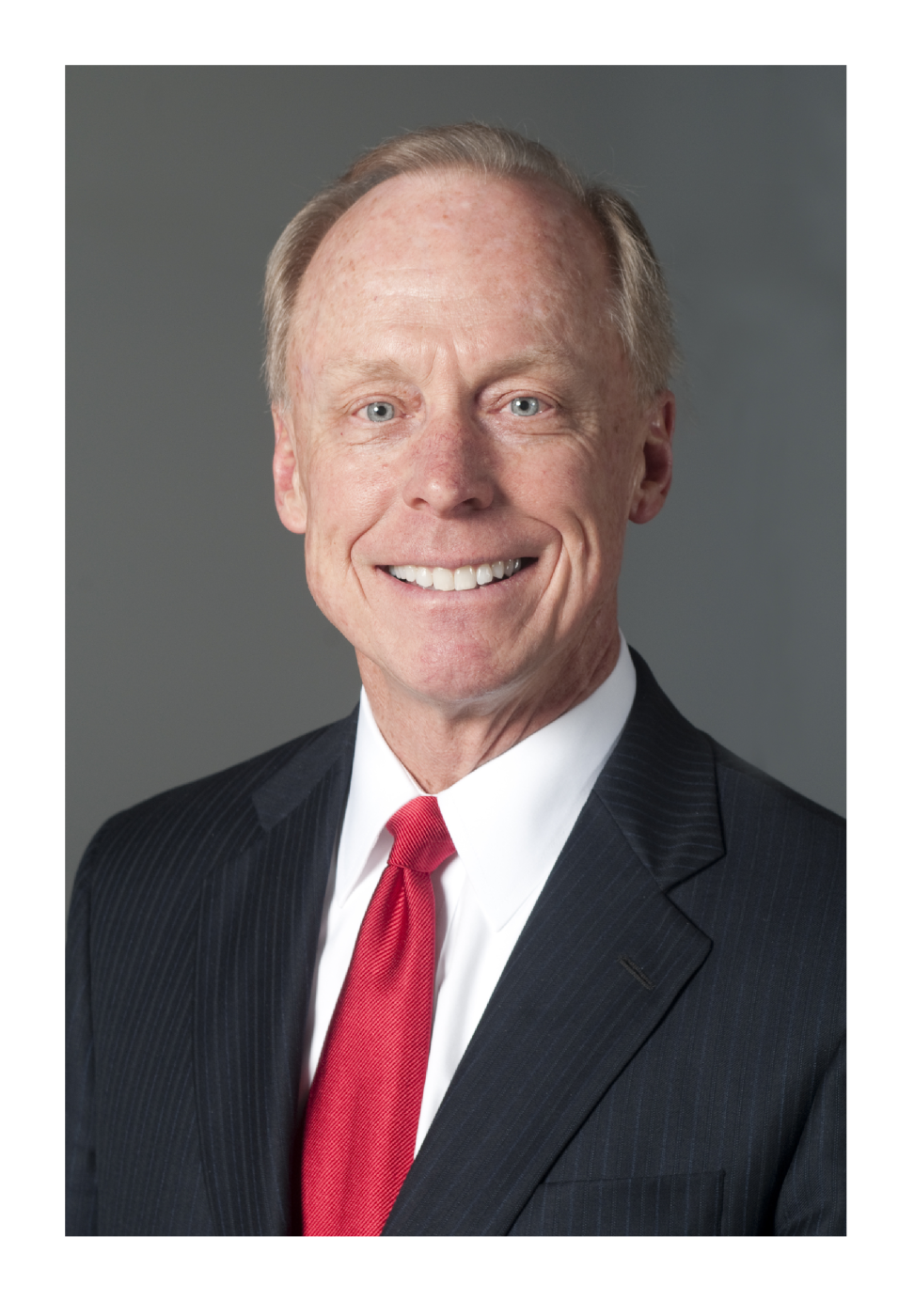
Q. Thank you, Judge Steven Jahr, for taking the time to talk to us about your tenure. Although it was relatively brief compared to your predecessor, the late William Vickrey, who served 20 years, the time you spent serving on the Judicial Council or one of its committees spans more than three decades. Given all the statewide experience you had before becoming Administrative Director, what do you wish you knew before you took on this task?
Judge Jahr: Having been a member of the council in the late 90s and then being involved in other activities through the years, I don’t think there was anything that surprised me when I arrived for what was expected to be about a two-year stint as Administrative Director.
I did think, however, because of the State Budget challenges that were presented at that time that two years could be a bit of a slog. And I suppose that the only surprise I really experienced was just how fast the time went, in part because of the collegiality and fellowship I felt during that time.
Q: Let’s go back to when you were an attorney in Southern California, and then you moved up to Northern California. What did you know, if anything, about the Judicial Council?
Judge Jahr: Very little. Of course, in the 70s when I was in Southern California, and then the 80s when my wife and I moved to Redding, the council was a very different organization than it is today. As an attorney, I think the most knowledge I had of the council was its involvement in promulgating the California Rules of Court, the subordinate rules to legislation on court practice and procedure.
When I became a judge, of course, I was immediately exposed to CJER—the Judicial Council’s Center for Judicial Education and Resources. I took courses, learning how to function as a judge, and then later I became an instructor in civil law procedure and court administration. Through that, I became knowledgeable of the CJER process and aware of all the really dedicated folks who worked there. That was my first exposure to the Judicial Council culture.
At that time, I was more involved with the California Judges Association, which was responsible for the ethics rules, and active in legislative initiatives in Sacramento, whereas the council historically had been seemingly more silent in those realms. Of course, that was before what I call the Great Reform Movement, which was launched initially by Chief Justice Malcolm Lucas and then dramatically enhanced by Chief Justice Ron George.
Before the reforms, we had 58 trial court systems funded entirely by the counties where they sat. Their courthouses were built and maintained by the counties. Even the employees of the superior courts worked for the county clerk’s office. So, there was a real organizational difference between then and now. Of course, to the extent that the counties provided any kind of support, the services for the courts varied substantially from county to county. There were huge disparities in court operations throughout the state. As the council gradually became more responsible for providing uniform services, it became more visible.
Q: How were you recruited to work on budget issues as a trial court judge and what did you learn from the budget process?
Judge Jahr: In the early 90s, I was a board member and officer of the California Judges Association. In that capacity, I came to know some of the folks from the council and its staff. When Chief Justice Lucas began his efforts to shift funding of court operations from the county to the state, he prevailed on the Judicial Council to form the Trial Court Budget Commission and the Task Force on Trial Court Funding. He asked me to join, and that’s really how I first got involved in council activities.
I learned straight off that developing a branch budget structure from what previously existed was going to be a long and challenging process.
It was clear that the courts were quite isolated from each other. There was very little interaction, almost no cross-pollination because they were autonomous entities within their own counties. So, for example, a successful innovation in one trial court may not be known to a trial court in a neighboring county.
There were also 58 different county financial systems and budgeting processes dictated by the counties, which were used for the courts within each of the counties. When we first started to try to roll up budgets and make comparisons, it was like comparing apples with oranges. It took years to establish a concrete budgeting process as a consequence.
Q: That was a lot of work and invisible to many outsiders. What do you wish the public, court staff, attorneys, and judicial officers would know about the Judicial Council?
Judge Jahr: My experience both as a council member from the late 90s and serving as Administrative Director between 2012 and 2014 is that there is a decidedly apolitical culture that the council is invested in. Openness and operational transparency are valued. It has always been composed of people who are sensitive to the highest ethical standards and have a great sense of collegiality.
I would also say there’s a culture of reform-mindedness that permeates the council—an approach of being less inclined to adhere to old ways for their own sake or to be preoccupied with matters of turf and territory. And, of course, this translated to staff because, as with any capable organization, the staff takes its lead from its governing body. It would be wonderful if the public could see how able and forward-looking the council is.
Q: How do you think the courts and the council work most effectively together? Because there’s that natural and healthy tension that exists between state centralization and local decentralization, something that may have actually inspired the reform movement you’ve described.
Judge Jahr: I agree with you. As I discovered in my time in Sacramento advocating for our budgets, lots of folks were unaware of the organizational structure of our branch. The judicial branch is not a traditional hierarchical structure. It’s not pyramidal. The statewide structure embodied in the council, in the Constitution, deals with budgetary matters, policy matters, and rulemaking, all of which enable equivalent and strong public access to the courts, county to county, through the use of uniform processes.
Decades ago, there were very different local rules from county to county, which really were impediments to access across county lines. And as transportation and communication realities of the 20th century advanced, those barriers really became significant. So, the statewide structure enables more uniform access.
That statewide structure is coupled with the local organizational structures in the appellate courts and in the 58 superior courts, and their work addresses unique problems that exist within their jurisdictions. The majority of policymakers on the council come from the individual courts in one way or another. And so, I think all of them, regardless of which hat they’re wearing, are daily confronted with that intersection between the state and local organizational processes. Ultimately, I think that while indeed tensions can present themselves, they usually yield positive outcomes, at least in my experience, in the sense that both state and local perspectives give rise to balanced outcomes.
Q: You’ve served as a member of the Judicial Council, as a presiding judge of your court, and as Administrative Director, and even now, in retirement, you are still involved in the council’s work. Please describe what you’re still doing.
Judge Jahr: Since my retirement, I’ve been involved in the Court Facilities Advisory Committee, chaired by Justice Brad Hill, and we have a role in overseeing the excellent work of its staff in building and renovating the hundreds of court facilities the council is responsible for.
Q: What roles do judicial officers, court administrators, and court staff have with the Judicial Council? You’ve touched on it a little bit. I wondered if you want to expound on it.
Judge Jahr: Judicial officers and court administrators populate the council membership itself. And those folks, along with court staff, participate in any number of the council’s standing advisory committees, working groups, and task forces, and assist in developing policies and rules of court. They support structures that are vital to the courts. For example, the council’s Center for Families, Children & the Courts provides invaluable backup to all the family law departments in the 58 superior courts. I think it’s also overlooked that many Judicial Council staff come from the courts and that courts routinely recruit from the Judicial Council staff, so there’s quite an openness and cross-pollination that has resulted, and I think it adds to a culture of cooperativeness.
Q: You mentioned the budget challenges to the branch when you served as Administrative Director. What were your biggest challenges and how did you approach them?
Judge Jahr: The council staff had necessarily grown during the preceding years as it undertook more responsibilities. Probably accelerated by the Great Recession, the time had come for a top-to-bottom reevaluation of the organization. I think a periodic self-evaluation and reset is important for any healthy organization.
I became Administrative Director during the restructuring mandated by Chief Justice Cantil-Sakauye, and these challenges were very much on my plate when I stepped into the organization.
The Chief Justice insisted that the self-evaluation process be conducted in the open and that any progress be publicly published and available. Our approach as the council’s staff organization was to address the issues systematically, rather than on an ad hoc basis. We created a system for structural change that was always open and transparent. We relied on a talented staff who were living through uncertain and turbulent times.
Q: How did you navigate your relationships with the other branches of government?
Judge Jahr: One of my duties was budget advocacy within the legislative and executive branches and I was greeted with some skepticism, quite frankly. There had been, of course, the Great Recession, which had substantially reduced revenues that the Legislature had to use to meet all of its needs. We had unfortunately just experienced a costly effort to create a statewide case management system for the 58 superior courts. Costly in the sense that the Legislature appropriated the money for it, and costly to us in the sense that that project was ultimately unsuccessful. So, I think those two things provoked reservation on the part of some staff members and some legislators.
Our response had to be that we would open ourselves up to, once again, transparent public examination and inquiry. We also had to sharpen our budget presentations so that they were more straightforward and clear.
Chief Justice Cantil-Sakauye’s resolve to conduct an open self-evaluation process benefited us enormously. She also made an exceptional presentation on behalf of the branch to the Legislature, and I think those things in combination over time enhanced our standing with the Legislature, which was all for the public good.
As far as the executive branch goes, the Governor and his staff and the Department of Finance were completely preoccupied with balancing the budget. Governor Jerry Brown had just recently come into office, and he’d inherited the travails of the Great Recession. He and the Department of Finance had to balance the budget on the backs of pretty much every state-funded entity, including, of course, the judicial branch. I remember specifically, they glommed on to very large accumulations of funds in our trial court facilities construction program just to help balance the budget.
My take on Governor Brown was that he was a pragmatist, first and foremost. He was interested in solving those immediate budget problems and perhaps creating a structure that would prevent those kinds of problems from occurring in the future. By the end of his term, long after I had yielded the office to Martin Hoshino, he had come to favor the branch because Chief Justice Cantil-Sakauye, through her persistence, had ultimately proved to him that the branch was worthy of support. I think everybody knows that branch funding improved largely at his insistence, and that he green-lighted the very significant reform in the facilities construction program, removing it from a fee and fine-based operation to one that was financed by the General Fund. This was the happy outcome with both the legislative and executive branches after a rocky start, post-Great Recession.
It was a multi-year approach initiated in my tenure and concluded in Martin’s to wean ourselves off fines and fees. There was a surprisingly large portion of the overall court operations that was derived from fee and fine collection. And one of the first initiatives that I recall the Chief Justice undertaking when she came in was to advocate to move court operations funding for our branch of government away from that and toward the General Fund. And this advocacy was occurring at a time when the public began pushing against the magnitude of fines and fees in traffic cases and in civil actions.
Q: You served during a turbulent time in the state. What do you miss the most about your time, if anything?
Judge Jahr: I’d say the collegiality and the fellowship, both when I was on the council as a member and when I served as Administrative Director. There was an overwhelming, warm fellowship between all the members, and it was wedded to a desire to improve the administration of justice. I miss those things, and I’m not the only one, because I’ve learned this is true from others with a similar experience.
Q: What are you most proud of during your tenure?
Judge Jahr: The staff. They were resilient and maintained their dedication to duty during very uncertain, turbulent times. I was ever grateful to them for following what were difficult directives and working cooperatively with our executive office as we moved through the reform process.
I am also pleased that we were able to complete that process of self-evaluation and make the organizational changes, all overseen by the leadership of the council, of course. In the end, I like to think that our activity and successes enhanced the trust and confidence that the courts—and perhaps Sacramento—had in the council and its staff.
Q: What kind of message would you have for council members and staff as we celebrate our first 100 years?
Judge Jahr: The council’s legacy is an honorable one. In my experience, it has always moved forward toward improving the administration of justice and improving public access to the courts, and especially over the last 30 years, doing so in cooperation with all the courts. The Judicial Council has dramatically transformed the judicial branch, all for the public good. So, for me, it’s been an honor, and I rather suspect for present and future council members, they’ll have the same conclusion.