
California Courthouses Using NASA Tool to Lower Carbon Footprint
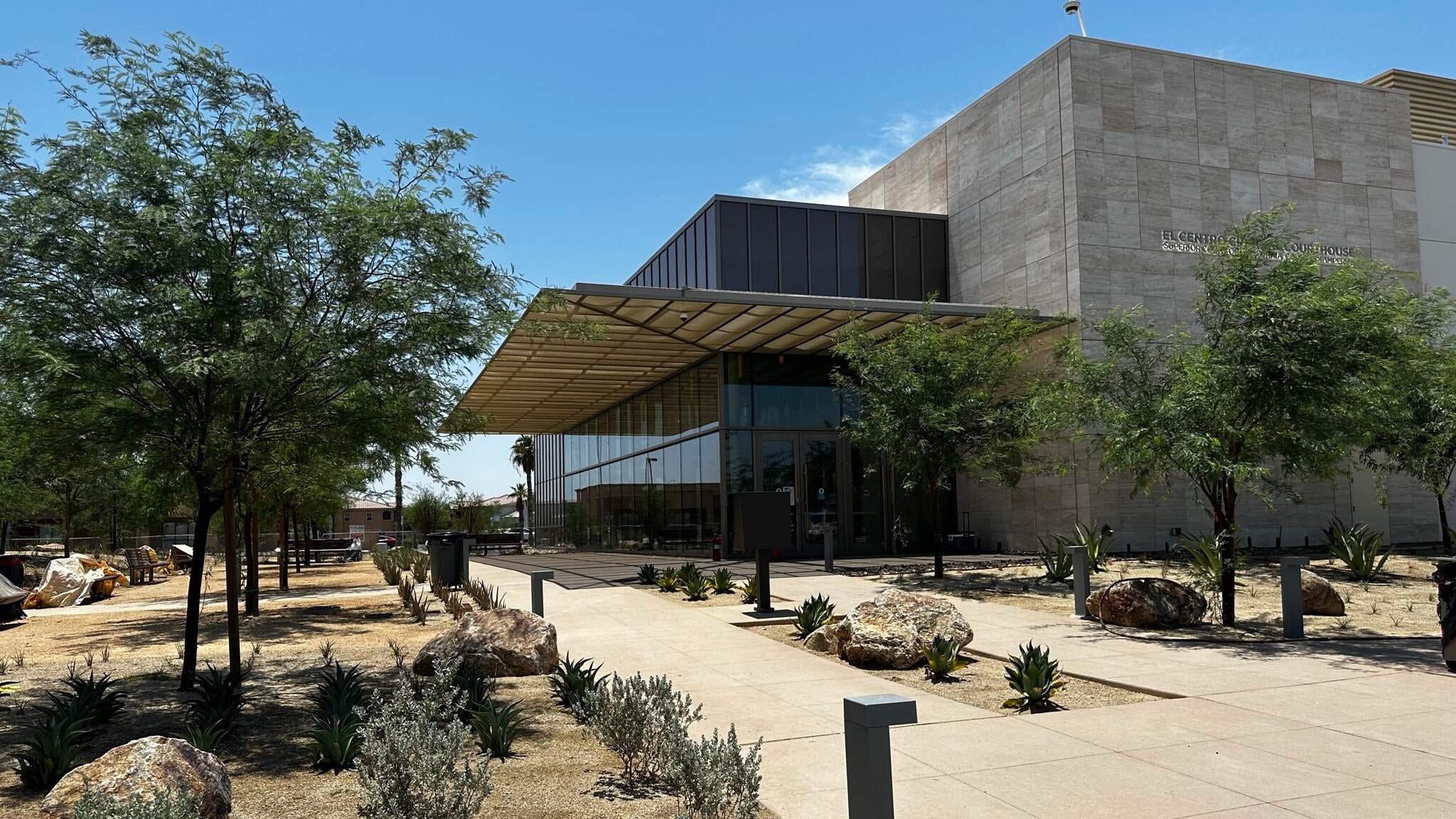
California’s judicial branch manages hundreds of court facilities across the state, which includes courthouses and other types of properties—nearly 20 million square feet for which the branch is responsible.
Data provided by NASA—and energy management software developed by Natural Resources Canada—helps the branch reduce the environmental impact of those facilities.
How the Data Software Works
NASA POWER is a free dataset of satellite-derived weather and solar data for any location on Earth. The California Judicial Council’s Facilities Services office—which oversees courthouse construction and maintenance across the state on behalf of the state’s judicial branch—accesses the data through RETScreen Expert, energy management software developed by Natural Resources Canada in partnership with NASA. That software combines the weather and solar data with the courts’ energy usage data to analyze building performance.

The Judicial Council received a NASA Recognition of Excellence Award at the 2026 NASA POWER Global Community Summit in September. Yassen Roussev, supervisor of the Sustainability Program in the council’s Facilities Services office, presented the council’s work to summit attendees virtually.
How California Courts Use the Data to Improve Sustainability
Weather is the biggest driver of swings in a building's energy use, so the NASA data enables the council to strip out the weather effect and see a courthouse's true energy performance.
The NASA data doesn’t help with weather forecasting, and the council doesn’t use it to directly determine thermostat settings or irrigation levels. Instead, the council uses the weather data to verify savings from building equipment or system upgrades, flag buildings using more energy than the weather would explain, and predict the savings and payback of future upgrades and projects before investing.
When the council has upgraded to modern digital controls and replaced worn-out heating and cooling equipment, the weather-adjusted analysis has shown reductions in energy use per square foot of more than half at individual courthouses, with natural gas use falling the most.
In 2025, 12 of the council's highest-energy-use courthouses cut their combined weather-adjusted energy use by about 9% through building management system upgrades and scheduling changes that reduced nighttime and weekend energy use.
Sustainability Efforts at California Courthouses
The council's sustainability efforts focus on seven areas: education and training, energy efficiency, emissions reduction, sustainable construction, water conservation, waste diversion, and resilient power systems.
The council's Facilities Services office presented an outline of the branch's sustainability strategies during a September 2024 council business meeting.
The Hall of Justice Courthouse in Santa Rosa features drought-resistant landscaping to reduce water consumption.
Utilizing those strategies, results for calendar year 2025 show that since the 2018 baseline, across council-managed buildings statewide:
- Weather-normalized energy use per square foot fell 6.5%
- Greenhouse gas emissions fell about 26%, even as floor area grew about 10% (roughly three-fifths of the drop in electricity-related emissions reflects California’s cleaner grid, while the rest reflects lower energy use in court buildings)
- Water use per square foot fell about 18% (against a 2019 baseline, the first year with complete water data)
Looking ahead, the next update to the branch’s Trial Court Facilities Standards, scheduled for adoption in December, will set energy use targets for new courthouses by climate zone and building size for the first time, well below what the existing portfolio averages today.
California Courthouse Construction and Management
The Judicial Council supports the court facilities of California's Supreme Court, Courts of Appeal, and trial courts by providing a broad range of services. These include facility planning, design and construction, Building Official duties, facility operations management, environmental compliance and sustainability, real estate services and asset management, and emergency planning and security coordination.