
California Chief Justice Delivers 2026 State of the Judiciary Address
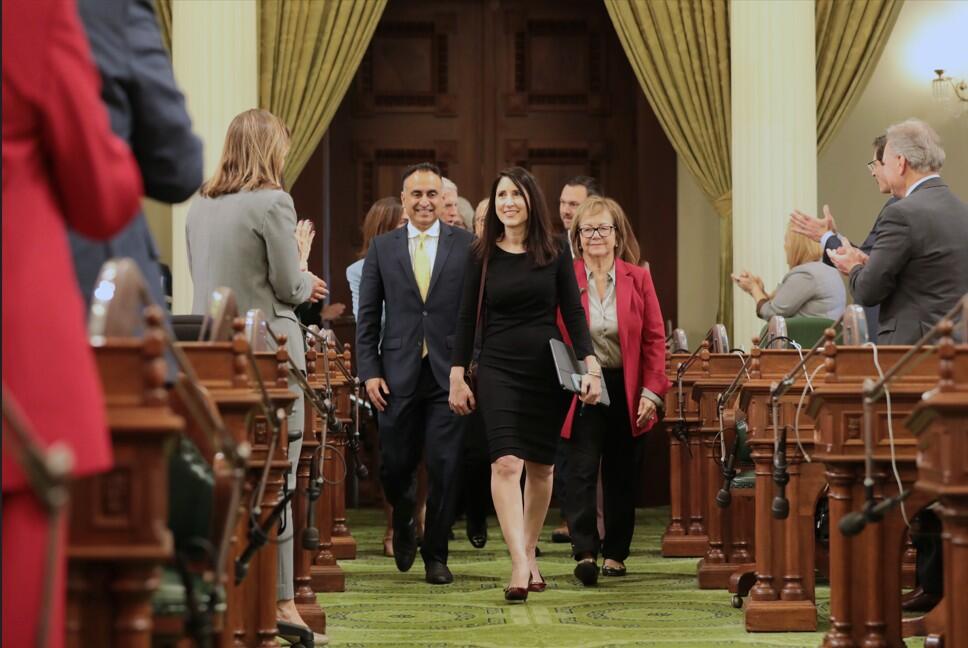
SACRAMENTO—Chief Justice Patricia Guerrero today delivered the 2026 State of the Judiciary address to the California Legislature. A transcript of her remarks is below, and an archived webcast of the address is available on the California Courts YouTube channel. Watch
"Thank you all so much. Thank you Speaker Rivas, Senate President pro Tempore Limón, distinguished statewide constitutional officers and guests.
I am proud to be joined here today by my colleagues from the California Supreme Court (and our Clerk and Executive Officer and court staff); justices, judges, and court executives from local courts around the state; members of our Judicial Council; the California Judges Association; the Bench Bar Coalition; and our justice system partners.
I thought about different approaches I could take with my remarks this year. With so much going on in our nation—so much controversy, division, uncertainty, and chaos as well—I’ve decided to offer you something different. If anyone is looking for controversial statements or divisive rhetoric, you will not get it. Instead, I offer you normalcy and a calm and measured report regarding the important work our judicial branch has undertaken over this past year, and some of the major issues facing the judiciary.
First, I want to commemorate a significant anniversary in the formation of our country. In 1776, our founders boldly declared their independence from Britain and its King, and stated that we are endowed with unalienable rights of “Life, Liberty and the pursuit of Happiness.” With force and clarity, they set forth their list of grievances against “the establishment of an absolute Tyranny”—included among their concerns was a statement that the King had “obstructed the Administration of Justice” and “made Judges dependent on his Will alone.”
They later offered a different path—establishing our constitutional republic of three separate and coequal branches of government. We must all safeguard this structure and the fundamental principles which form the basis of our government and the promise of this country. This year, the judicial branch plans to celebrate the unique role we play, and the privilege we have, to uphold the rule of law for all who appear before us—without fear or favor, with courage and steadfast commitment to our oath that we have taken to uphold our constitutions. Now we look forward to celebrating our respective roles alongside all of you.
Our jobs are made more challenging, however, by the rise in threats against the judiciary—something I’m not sure our founding fathers would have precisely envisioned. The issue of judicial security is prominent in the minds of many judicial officers, and recent events have unfortunately demonstrated that service on the bench can pose significant safety risks.
The Judicial Council of California has made judicial security a legislative priority. We need sufficient resources in order to protect “personnel, the public and court systems from physical, online, and cyber threats.” The council also will continue to advocate for legislation designed to protect the privacy of judges—an issue that is fundamentally intertwined with judicial security.
A marked increase in negative rhetoric surrounding judges, including from elected officials, has contributed to these concerns. We welcome public scrutiny, transparency, and accountability regarding the legal reasoning reflected in our rulings. Public engagement, whether resulting in praise or criticism for our decisions, is commendable and should be encouraged. We do not, however, welcome divisive name-calling or inaccurate and uninformed accounts about our roles—we believe this serves only to distort the public’s understanding of the judiciary and shake their confidence in our democracy. And we should all emphatically speak out against normalizing personal attacks against judges—for all our sakes.
Fortunately in California, we have many examples of how government should work, even in challenging times, and I would like to express my appreciation for your partnership and your support in these areas. I have spoken in the past regarding our three-branch solutions. I would like to touch upon a few examples.
Remote Proceedings
Since March 2022, over 6 million proceedings have been conducted with remote technology. In a one-year period from September 2024 to August 2025, that represented over 7,000 proceedings per day. Trends in positive experiences with these services have remained consistent over time, at about 95% satisfaction overall.
The data unequivocally shows great public interest in having remote options, but existing statutory authority for remote proceedings is scheduled to expire at the end of this year (on January 1, 2027), or precisely I believe in 2027, but I’ll go with the end of the year for all of you. For the benefit of all Californians who see the advantages of technology and choose to appear remotely, I look forward to working with all of you to meet Californians’ needs and expectations in this area.
CARE Act Proceedings
As you know, the Community Assistance, Recovery, and Empowerment (CARE) Act, which you passed in 2022 and which has been implemented in phases through December 2024, is now fully operational in all 58 counties.
Between October 2023 and January 2026, there have been a total of 3,810 petitions filed. During that same time, courts ordered 925 CARE agreements and plans; and a further 1,835 individuals are still being actively engaged in these court proceedings. The Judicial Council publishes this CARE Act data on its California Courts website, providing a fuller description of the CARE process for anyone to see.
These numbers, understandably, may not be satisfactory to those whose loved ones do not qualify for CARE Act assistance. With the recent expansion of the program to cover bipolar disorders with psychotic features—in addition to the original criteria of schizophrenia spectrum disorders—we do hope to reach more people in need and help redefine what justice looks like for Californians living with certain behavioral health challenges.
While this is not a panacea, we can be proud of our partnership in this area. For each person who receives assistance—whether it is through a voluntary agreement or court-ordered plan or other referrals for services—their lives are greatly improved because of the CARE Act. In other words, the volume of petitions filed alone does not fully capture the overall effectiveness of the program.
I would like to acknowledge the tireless work of our judges, court staff, and community partners who are managing the CARE Act petitions filed in our courts. As you know, they’re helping individuals with severe mental illness access housing, medication, and recovery services before they fall deeper into crisis. And these courts are not just legal forums, they are bridges to stability, safety, and hope for Californians who need it most. I thank our Governor, each of you in the Legislature, and each of our trial courts for your commitment to exploring ways to help these individuals.
In addition to these two areas, I also look forward to partnering with you to address other ongoing, and in some instances, longstanding, issues of concern that are facing our courts.
Judicial Positions
First starting with our trial courts. We are grateful for the $70 million in ongoing funding that has been proposed in the Governor’s budget for the increasing costs of trial court operations.
A longstanding problem our courts face, however, relates to the lack of funding for judgeships in counties with the greatest need. We are updating our judicial needs assessment—but the latest report from October 2022 reflects some stark realities I’d like to provide some context on:
- In recent years, the judicial branch has received funding for the 50 judgeships that were authorized as far back as 2007 (by AB 159 (Stats. 2007)): Two positions were funded in 2018 and allocated to Riverside County Superior Court; 25 positions were funded in 2019; and 23 positions were funded in 2022.
- Based on the October 2022 report, there was still a need even at that time for 98 additional judicial officers.
While this funding has helped to minimize the gap between the number of authorized judgeships and judicial needs, there are still significant, ongoing challenges and needs that remain—with the need for more judges being especially acute in Riverside and San Bernardino Counties.
What this means in practical terms is that justice is not served the way that it should be. As an example, in Riverside County Superior Court, during the period from January 9, 2023 to March 6, 2026, 437 misdemeanor cases and 57 felony cases were dismissed pursuant to Penal Code section 1050, subdivision (j), because of the condition of the court’s congested calendar. This is despite the Judicial Council making available temporary assigned judges when requested by the superior court, to help alleviate the burden on the court.
- Riverside, as an example again, has the highest use of our temporary assigned judges.
- Last fiscal year, the total expense associated with these assigned judges in Riverside County alone was about $3M.
We will continue to make resources available to the courts through our Temporary Assigned Judges Program, and we look forward to working with all of you to find more permanent, predictable, and sustainable solutions to these challenges.
I’d also like to touch upon AI. The rapid evolution of artificial intelligence continues to present both challenges and opportunities as we work to expand access to justice and improve efficiency across the judicial branch. In 2025, our Artificial Intelligence Task Force developed comprehensive guidance for courts on the responsible use of generative AI tools. The task force is now focusing on deep fakes and the impact of AI on the admissibility of evidence. I think you’ll agree with me that it’s a critical area to maintain integrity and public trust in judicial proceedings.
The Judicial Council approved a new rule of court on the use of generative AI for court-related work by judges and court staff. These guidelines emphasize accuracy, oversight, and transparency, while proactively mitigating risks related to privacy, bias, and security. They also underscore the importance of human judgment in all AI-assisted processes, ensuring that technology complements—rather than replaces—the expertise of our judicial officers.
The judicial branch is laying a strong foundation with its model policies, training programs, and pilot case studies that explore practical applications of AI.
We are committed to working collaboratively with all of you and our stakeholders to ensure that statutory requirements protect the public without unnecessarily restricting the appropriate and beneficial use of AI tools. Our goal is to strike the right balance between innovation and accountability, ensuring technology does not interfere with—but instead enhances—justice.
Impact of Federal Immigration Enforcement on Court Operations
Last year, I also spoke about the considerable stress, anxiety, and confusion experienced by many Californians regarding federal immigration policies and enforcement as they intersect with our state courts. I also previously made clear that the federal government, of course, has the right and obligation to do its job but it should conduct its operations in a way that does not interfere with ours.
Unfortunately, that has not happened. Public apprehension has continued to grow because of the way federal enforcement action has occurred—including the presence of federal officers in at least 17 of our state courthouses. These developments raise profound questions about access to justice, community trust, and the safety of individuals seeking legal remedies.
The Judicial Council has taken proactive steps to address some of these challenges. Over the past year, we have provided extensive training for our courts on federal executive orders, the legal implications of immigration activity at courthouses, and relevant California statutes that are designed to uphold the principle of equal justice under the law.
We have collected data informally so that we have a better understanding of the impact on court operations. Next month, the Judicial Council will consider a proposed California Rule of Court that would formalize our information gathering regarding civil arrests at state courthouses. This will help inform next steps as we consider options for protecting against encroachments on our ability to ensure that courts remain open and accessible to everyone.
I would like again to reiterate that we can all perform our independent obligations consistent with our constitutional mandates in support of the rule of law, with our courts focusing on being available to everyone. We will continue to do everything within our power to ensure that all members of the public can freely access our state courts, to safeguard individual rights, and to promote the fair and timely administration of justice.
State Bar Update
I also want to report back on issues I raised last year with respect to the State Bar and the disastrous experience we had with the February 2025 bar exam. I can still say that in a calm and measured way. As you know, the California Supreme Court and the Legislature share an important partnership concerning oversight of the State Bar, with the court managing licensing and disciplinary functions and the Legislature setting the attorney licensing fee and auditing the bar’s governance and finances.
For our part, the court has taken several corrective actions on the bar exam:
- Approved scoring adjustments to the February 2025 exam and an expansion of the Provisional License Program;
- Ordered the return to in-person testing using the Multistate Bar Exam provided by the National Conference of Bar Examiners; and
- Amended rules governing the exam and attorney admissions in order to strengthen and clarify the authority of the Committee of Bar Examiners and its role over attorney admissions. The amended rules address question review, validation, and proctoring; subpoena authority; oversight of the Office of Admissions’ budget; fee setting; and mandated cost-benefit analysis before there’s any proposed changes to the exam.
It is too soon to report back on the future of the California Bar, but it is safe to say that nobody wants a repeat of what happened last year, and we will keep this experience in mind in determining what additional steps to take when presented with the State Bar’s recommendations in the near future.
Through our collaborative and complementary governance responsibilities, together we will continue to ensure that the public is protected and qualified new attorneys are admitted to the practice of law in our state.
Legislative Visits
I know that the challenges I have highlighted are not coming as a surprise to many of you, or at least I hope they’re not. I believe the courts have been transparent in explaining the difficulties we face and the needs we have in order to properly serve the public.
In addition, we have also invited you to come see the good work our courts do even under often difficult circumstances. Thank you for accepting our invitations to visit our various courts across the state. I know Senator Umberg thanks you too. I see him waving in the back. You guys must agree.
We continue to work with our local trial courts to coordinate legislative visits so that members can experience first-hand our day-to-day court operations—the challenges, innovations, and efficiencies—as well as the opportunity to meet with the committed public servants who provide court services to the constituents in your districts.
Since I last addressed you, we have been pleased to facilitate the visits of at least 15 senators and 22 assemblymembers, who have visited 15 local trial courts; some of you have visited more than once, some to more than one jurisdiction in your district, and some of you have worked directly with your local courts to schedule these visits.
We hope that, through these visits, you can see what I know to be true—we have a strong foundation for overcoming the real challenges we face.
We have over 2,000 dedicated public servants who are committed to the fair and impartial administration of justice. These judges, I believe, are significantly underpaid. The last judicial salary adjustment, separate from any adjustments provided under Government Code section 68203, was 19 years ago in 2007, when judges received an 8.5% increase. Judicial salaries are significantly lower than those of certain California state and local government attorneys, with growing pay differentials worsening over many years. I recognize we face a difficult financial budget this year, but I believe it’s necessary to flag this now because this level of inequity jeopardizes the judicial branch’s ability to attract and retain the best-qualified candidates for the bench. I look forward to discussing this further with you in the near future.
Californians rely on and deserve a judiciary that delivers the highest quality of justice and service. We do this through, not only our daily work in the courtroom, but through our commitment to upholding our ethical duties to maintain independence, integrity, and impartiality; our robust educational requirements; and through outreach efforts like our court’s annual special oral argument sessions at various locations throughout the state, my Power of Democracy Civic Learning Initiative, and countless other training, mentoring, and outreach programs held on a regular basis by courts at every level throughout the state.
This year, in addition to commemorating the 250th anniversary of our Declaration of Independence, we also mark an important milestone for the Judicial Council of California—the 100th year since it was founded through a vote of the people in 1926.
Through the council’s work, we have achieved greater consistency across courts, built a statewide administrative infrastructure, and consistently sought better funding for needed systemic improvements.
I am grateful for the vision, dedication, and hard work of the judicial branch leaders and Judicial Council members who have preceded me to build a strong and accountable judiciary that works collaboratively with our sister branches.
Because of this foundation—stemming from the structures we have in place, and more importantly, the people who are committed to this work—the state of the judiciary is strong, resilient, and committed to the rule of law and equal access to justice for all Californians.
Sister Branches
And although my focus, of course, is on the judiciary—I also want to acknowledge two points regarding our sister branches of government.
First, I was so honored to swear in the Senate’s new President pro Tempore Monique Limón earlier this year. In the interest of time, I will not repeat all the “firsts” that her selection represents. But we’re so proud of her. It also has been a true privilege to work with Speaker Robert Rivas since his swearing in in June 2023. I also note this means Latinos are the leaders of two of the three branches of government—the judiciary and both houses in the Legislature—for the first time in California’s history.
Second—Governor Newsom. As he concludes his second term as Governor of our great state at the end of this year, I want to thank him for his thoughtful collaboration with the Legislature and the Judiciary, and for his dedicated service to the state.
I want to acknowledge the Governor for his collaboration on our three-branch solutions to improve access to justice in California, his willingness to listen to the needs and concerns of the judiciary, and his efforts to provide stable ongoing funding for the judicial branch.
Through his outreach efforts to encourage more diverse candidates from a variety of legal backgrounds, our Governor has also diversified California’s judiciary in a meaningful way. Of his 695 judicial appointments—with one more coming soon—more than half have been women, and more than half have been people of color. We thank the Governor for strengthening California’s judiciary.
And we’ll have more time with him—so I look forward to our continued collaboration. And I also look forward to the judiciary’s continued, strong partnership with the Legislature in our shared endeavor to serve the people of our state.
In closing, I would like to again reinforce the importance of our nation’s 250th celebration of our independence. The judiciary remains committed to the same guiding principles which are embodied in that document—equality, unalienable rights, justice, and the rule of law.
With your help, we have made great strides in upholding these principles. And the judiciary remains committed to navigating through the obstacles I have highlighted and safeguarding these principles for all future generations.
Thank you for the opportunity to address you."
