
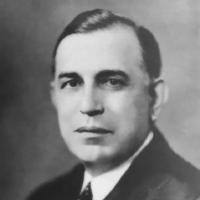
Profile of Phil S. Gibson
When Phil S. Gibson was appointed Chief Justice in 1940, he inherited a backlog of pending cases that he managed to clear away in his first two years.
By 1941, after convincing the state Legislature to transfer court rulemaking responsibility to the Judicial Council, he was directing the condensation of court rules into everyday English, having brought Bernard E. Witkin, his clerk for many years, to the council for the task.
Chief Justice Gibson also pushed through the Legislature a system of municipal and superior courts, with judges either elected by voters or appointed by the Governor and established the Commission on Judicial Qualifications (now the Commission on Judicial Performance), the first agency in the country to investigate complaints against judges.
“Because Gibson had been a practicing lawyer,” said Mr. Witkin in praise of his colleague, “he had a sense of order and efficiency for tackling the systems of the court. . . . He brought better equipment, more efficient methods of operation, and better staff to the court, including career law clerks in adequate numbers for all of the justices so that they could face the increasing number of cases. He turned the court into a model for all the nation.”